
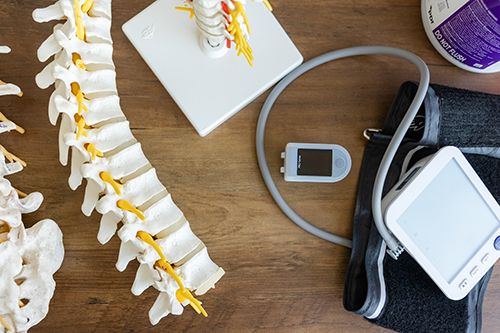
Spine & Back
Pain originating from the discs, joints, or bones of the spine.
Herniated & Bulging Discs
Discs cushion each vertebra. When disc material pushes outward, it can irritate or place pressure on nearby nerves.
Common symptoms
- Back pain that travels into the leg or arm
- Numbness, tingling, or weakness along a nerve path
- Pain that may worsen with sitting, coughing, or bending
How we approach it
Treatment may include epidural steroid injections, activity modification, physical therapy, and other minimally invasive options depending on the condition.
Spinal Stenosis
Spinal stenosis is a narrowing of spaces within the spine that can place pressure on the spinal cord or nerve roots.
Common symptoms
- Leg pain, cramping, or heaviness while walking or standing
- Relief when sitting or leaning forward
- Numbness or weakness in the legs
How we approach it
Treatment options may include epidural injections, minimally invasive procedures, physical therapy, or coordination with a spine surgeon when appropriate.
Degenerative Disc Disease
Degenerative disc disease describes age-related changes in the discs between the vertebrae that may become painful.
Common symptoms
- Chronic back or neck pain with occasional flare-ups
- Pain that may worsen with sitting or bending
- Stiffness in the affected area of the spine
How we approach it
Treatment focuses on reducing pain and inflammation while maintaining mobility and function.
Facet Joint Syndrome
Facet joint pain originates from the small joints connecting the vertebrae. These joints can become irritated or arthritic.
Common symptoms
- Localized back or neck pain
- Pain that worsens with twisting or arching backward
- Stiffness after periods of rest
How we approach it
Diagnostic medial branch blocks may help identify the source of pain. Radiofrequency ablation may provide longer-lasting relief in appropriate patients.
Sacroiliac (SI) Joint Dysfunction
The sacroiliac joint connects the base of the spine to the pelvis and can be a source of lower-back and buttock pain.
Common symptoms
- Pain in the lower back, buttock, or back of the thigh
- Pain with climbing stairs or prolonged sitting
- Discomfort while standing on one leg
How we approach it
Diagnostic SI joint injections may help identify the source of pain while also providing relief. Additional procedures may be considered when appropriate.
Chronic Low Back Pain
Back pain that persists beyond three months, often after the original injury has healed. It can stem from the discs, facet joints, muscles, or a combination.
Common symptoms
- Dull, aching, or sharp pain in the lower back
- Stiffness that’s worse in the morning or after sitting
- Pain that limits standing, bending, or lifting
How we approach it
Treatment begins by identifying the source of the pain. Depending on the diagnosis, treatment may include diagnostic injections, radiofrequency ablation, physical therapy coordination, or medication management.
Spinal Compression Fractures
Compression fractures occur when a vertebra weakens or collapses, often in patients with osteoporosis.
Common symptoms
- Sudden back pain
- Pain that worsens while standing or walking
- Loss of height or changes in posture
How we approach it
Depending on the fracture and the patient’s overall health, treatment may include conservative management or vertebral augmentation procedures.
Failed Back Surgery Syndrome
This describes persistent or new pain following one or more spine surgeries.
Common symptoms
- Pain that continues or returns after spine surgery
- Nerve pain, numbness, tingling, or weakness
How we approach it
Treatment depends on imaging, examination, surgical history, and the suspected source of pain. Options may include injections or neuromodulation therapies.
Nerve Conditions
Pain caused by irritated, compressed, or damaged nerves may feel burning, shooting, tingling, or electric.
Sciatica
Sciatica refers to pain that follows the sciatic nerve from the lower back into the buttock and leg.
Common symptoms
- Shooting pain down one leg
- Numbness, tingling, or weakness
- Pain that may worsen with prolonged sitting or standing
How we approach it
Treatment may include epidural steroid injections, physical therapy, medication management, and other procedures depending on the cause of nerve irritation.
Peripheral Neuropathy
Peripheral neuropathy occurs when nerves outside the brain and spinal cord become damaged.
Common symptoms
- Burning, tingling, or pins-and-needles sensations
- Numbness or sensitivity to touch
- Weakness in the affected area
How we approach it
Treatment is tailored to the cause and may include medication management, nerve blocks, and selected neuromodulation procedures.
Complex Regional Pain Syndrome (CRPS)
CRPS is a chronic pain condition that commonly affects an arm or leg following an injury or procedure.
Common symptoms
Burning or throbbing pain
Swelling or changes in skin temperature or color
Increased sensitivity to touch
How we approach it
Treatment may involve sympathetic nerve blocks, physical therapy coordination, medication management, or spinal cord stimulation.
Post-Surgical & Chronic Post-Operative Pain
Some patients experience pain that continues beyond the normal healing period following surgery.
Common symptoms
- Persistent pain near the surgical site
- Burning, tenderness, or numbness around a scar
- Pain that limits normal activity
How we approach it
Treatment depends on whether the pain is primarily nerve-related, mechanical, or inflammatory.
Joint Pain
Joint pain may result from arthritis, injury, inflammation, or normal wear over time.
Knee, Hip & Shoulder Osteoarthritis
Osteoarthritis is the gradual breakdown of cartilage within a joint, which may result in pain and stiffness.
Common symptoms
- Joint pain that worsens with activity
- Morning stiffness
- Swelling or reduced range of motion
How we approach it
Depending on the joint and severity, options may include injections, nerve blocks, radiofrequency ablation, physical therapy, and other interventions.
Myofascial Pain Syndrome
Myofascial pain may develop from tight, tender areas within muscles or surrounding connective tissue.
Common symptoms
- Deep aching muscle pain
- Tender trigger points
- Pain that persists despite rest or stretching
How we approach it
Trigger point injections, physical therapy, stretching, and other conservative treatments may be recommended.
Complex & Widespread Pain
Some pain conditions affect multiple areas of the body or involve several different sources of pain.
Fibromyalgia & Widespread Chronic Pain
Fibromyalgia is characterized by widespread musculoskeletal pain and may also involve fatigue and sleep disturbance.
Common symptoms
- Widespread aching or tenderness
- Fatigue or unrefreshing sleep
- Difficulty concentrating
How we approach it
Treatment is individualized and may involve medication management, targeted treatments, physical activity, and coordination with other healthcare providers.
Head & Face
Certain pain conditions involving the head, neck, and face may respond to targeted interventional treatments.
Occipital Neuralgia
Occipital neuralgia involves irritation of nerves running from the upper neck into the scalp.
Common symptoms
- Sharp or shooting pain at the back of the head
- Tenderness at the base of the skull
- Pain that may radiate toward the forehead or eyes
How we approach it
Occipital nerve blocks may be used diagnostically and therapeutically. Additional treatment may be considered based on the patient’s response.
Cervicogenic headache
Cervicogenic headaches originate from structures in the neck rather than from the head itself.
Common symptoms
- Headache beginning in the neck or back of the head
- Neck stiffness or reduced range of motion
- Pain associated with certain neck movements
How we approach it
Treatment may target the cervical spine with diagnostic blocks, radiofrequency ablation, physical therapy, or other appropriate interventions.
Don’t see your condition listed?
This list represents many of the conditions we treat, but it is not exhaustive. Contact our office to learn whether our team may be able to help with your pain condition.
The information on this page is provided for general educational purposes and is not a substitute for a medical evaluation.
Treatment recommendations are individualized following an appropriate consultation and examination.