
The sympathetic nerves are part of the autonomic nervous system that controls our “fight-or-flight” response. They can constrict blood flow and increase heart rate, perspiration, and blood pressure. Sometimes these nerves can excessively transmit pain after an injury. The goal of this nerve block is to stop this response. During this minimally invasive procedure, a numbing medication (lidocaine or bupivacaine) is injected to block these nerves. The medications are delivered to the sympathetic nerve bundle that is located in front of the L2, L3, and L4 vertebrae.
What is a lumbar sympathetic block used for?
A lumbar sympathetic block is used to relieve chronic leg and foot pain caused by conditions such as complex regional pain syndrome (CRPS) or reflex sympathetic dystrophy (RSD). These conditions can result from a nerve injury and result in severe pain, sensitivity, and color changes in the leg. The goal is to reduce pain so that you can resume normal activities and physical therapy.
How is the injection performed?
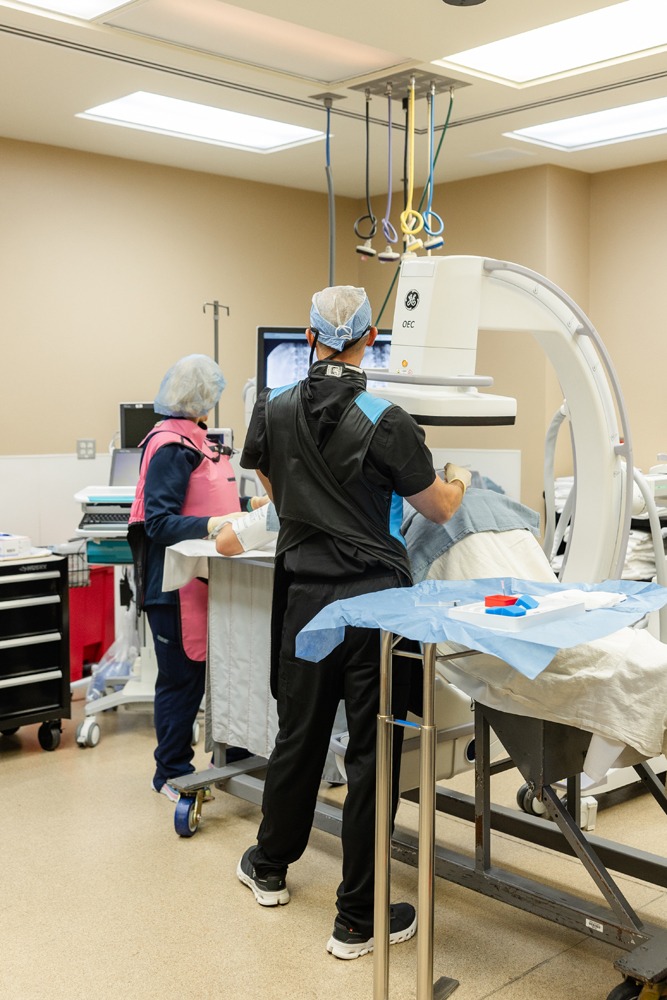
You will have an IV placed. You will lie face down on the x-ray table. You may be given sedation through the IV. Your lower back will be cleaned with a solution, and a local anesthetic will be injected to numb the skin. The doctor will insert a needle under fluoroscopic (x-ray) guidance through the skin and direct it to the lumbar sympathetic ganglia which is in the lower back next to the spine. The fluoroscope allows the physician to watch the needle movement in real time on a monitor. Contrast dye is injected to assure proper placement. When the needle is properly placed, the medication is injected. The needle is removed. Some mild discomfort may occur with the injection, but it is usually not very painful.
What are the results?
Many patients experience pain relief and benefits from the procedure. Commonly, patients need several lumbar sympathetic blocks to achieve long-lasting results. The timing of the procedures is determined by the results of the treatment.
What are the risks?
A lumbar sympathetic block is a relatively safe procedure with minimal risk of complications. Because the injection is performed under x-ray guidance, risks are minimized. Risks include bleeding, infection, allergic reaction, nerve damage, paralysis, a drop in blood pressure, anesthetic toxicity, hematuria (blood in the urine), numbness, weakness, and medication side effects.
What precautions should be after the procedure?
As you recover from the procedure, you may need to:
Apply an ice pack as instructed by your doctor
Adequately rest for a specific period of time
Avoid driving or rigorous activity for at least a day
Avoid taking a bath or using a hot tub for 24 hours
How long does a lumbar sympathetic block last?
The numbing agent used for the injection only lasts 6-8 hours. However, the benefits of the block may last much longer. Every patient is different. Some patients experience long-term relief of the pain and do not need a repeat injection. Other patients may receive partial relief of the pain and need a second or third injection.
