
What is a sacroiliac joint injection?
A sacroiliac joint injection is used to diagnose or treat low back pain that comes from your sacroiliac joint. This joint is the place where your spine connects to your pelvis. For the procedure, your doctor injects medicine directly into the joint to ease pain.
Why might you need a sacroiliac joint injection?
Your doctor might do a sacroiliac joint injection to diagnose or treat pain that may be coming from your sacroiliac joint. Some pain in the low back, buttock, or hip may come from these sacroiliac joints. A sacroiliac joint injection is a good way to find out if your pain is from a problem in the sacroiliac joint.
How is a sacroiliac joint injection performed?
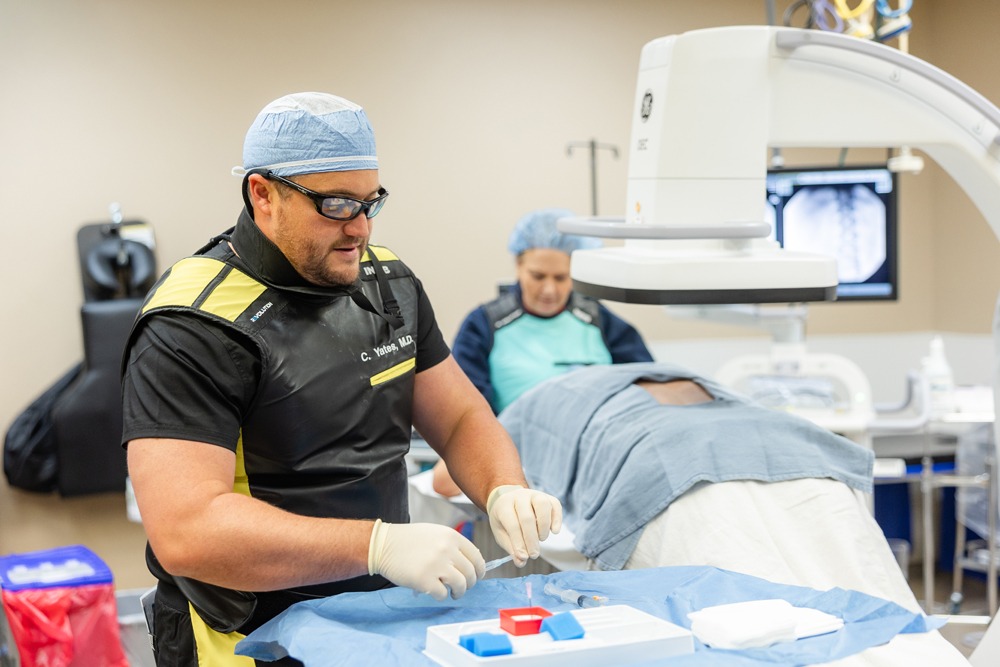
For this procedure, your doctor injects numbing medicine (local anesthetic) and steroid into the joint. Your doctor will us X-ray (fluoroscopy) to guide the needle into the joint. A small amount of X-ray contrast dye is then injected to confirm proper placement.
What are the risks of a sacroiliac joint injection?
Sacroiliac joint injections are generally safe. Side effects are rare. Some possible risks of the procedure include:
- Infection at the injection site.
- Bleeding at the injection site.
- Nerve damage.
- Leg numbness or weakness.
- Increased pain.
- Allergic reaction to the medicines.
You could also experience steroid-related side effects from the shot. These include short-term (temporary) increases in blood sugar levels for 1 to 2 days, an allergic reaction, difficulty sleeping and flushing of your face.
You may have other risks based on your specific situation and other health problems. Discuss any concerns with your doctor beforehand.
How do you get ready for a sacroiliac joint injection?
You will talk with your doctor about the location of your pain. Let them know if you have an infection, fever, or any other recent health problems. If you have diabetes or use any blood-thinning medicines, check if you need to take any special safety measures.
You should also discuss all your medicines with your doctor. You may need to stop taking certain medicines a few days before the shot. Also be sure to tell your doctor if you:
- Have any allergies.
- Have had any problems with contrast dyes, past injection procedures, or other medicines.
- Are breastfeeding, pregnant, or may be pregnant. Your doctor may tell you not to eat or drink before the procedure. You may elect to receive IV sedation during the injection. You should arrange to have someone drive you home afterward. Your doctor may give you other instructions about how to get ready.
What happens during a sacroiliac joint injection?
Your exact procedure may differ. But these are the general steps for a sacroiliac joint injection:
- You will lie face down on an X-ray table.
- You may get medicine to help you relax (sedation).
- The skin on your lower back and buttocks will be cleaned.
- The doctor will use medicine to numb the skin around the injection area. It may burn and sting for a few seconds.
- The doctor will place the needle tip into the sacroiliac joint using X-ray to guide the needle.
- The doctor injects a small amount of the X-ray contrast dye through the needle. It will confirm that the needle tip is in the joint.
- The doctor injects the medicine into the joint. This medicine may include a local anesthetic to block the pain. It may also include a steroid to reduce inflammation.
- The needle will be removed, and a bandage will be applied.
What happens after a sacroiliac joint injection?
You will be watched for about 30 minutes after the procedure. After recovery, someone can drive you home. Ask your doctor about any activity restrictions after the procedure. It is okay to use ice in the area of the shot if needed. Wait 24 hours before taking a bath. Make sure to follow all your doctor’s instructions for care, including any directions about your medicines.
You may be sore from the injection. You may also have some slight weakness in your leg for a few hours after the shot. If your pain comes from the sacroiliac joint, you should feel immediate pain relief in that area in the hours after the procedure because of the numbing medicine. As it wears off, the pain may start to feel worse.
If your doctor gives you a steroid medicine, it may take up to 7 days for the medicine to start reducing pain and inflammation in the joint. As a result, you may feel better for the first few hours after the shot, but the pain may get worse for a few days before the steroid starts working.
Your doctor might ask you to keep a diary of your pain after the injection. A diary can help find out if your pain comes from the sacroiliac joint. It can also be used to decide how helpful an injection may be in the future.
Call your doctor if you have:
- Severe pain.
- Weakness or numbness in the leg that lasts more than a few hours.
- Fever.
- Bleeding at the injection site.
- Signs of infection at the injection site. These include redness, swelling, and oozing.
- Your doctor can tell you more about what you should do and what you can expect after the sacroiliac joint injection. You will need to follow up with your doctor to talk about the effects of the procedure and make a plan for future treatment of your pain.
