
Radiofrequency ablation (RFA), also called rhizotomy or neurotomy, is a novel non-surgical technique of treating pain. This technique employs radiofrequency waves to produce electrical energy and the heat produced with this damages the nerves transmitting pain signals to the brain. It denatures the sensory nerves that transmit pain. This procedure is performed to treat painful facet joints in the spine that usually cause chronic mid and low back pain and neck pain. This technique can also be used to treat genicular nerves that supply the knee. Other specialists can use radiofrequency for procedures on the thyroid, bladder, etc…
What are the indications for radiofrequency ablation?
Radiofrequency ablation treatment is considered only after it is confirmed that the cause of back pain lies in the facet joints and this is confirmed by performing a diagnostic facet joint injection called a Medial Branch Block (see Medial Branch Block information page for further details on this). Facet joint and medial branch nerve injection relieves pain for a short duration whereas radiofrequency ablation can keep you pain-free for a longer period of time.
What are contraindications for radiofrequency ablation?
The procedure cannot be performed if you have an active infection or are receiving antibiotic therapy. You may also need to hold certain blood thinning medications. Also, inform your doctor if you are allergic to medications used in the procedure. Be sure to discuss these situations with your doctor before the procedure.
How is the procedure performed?
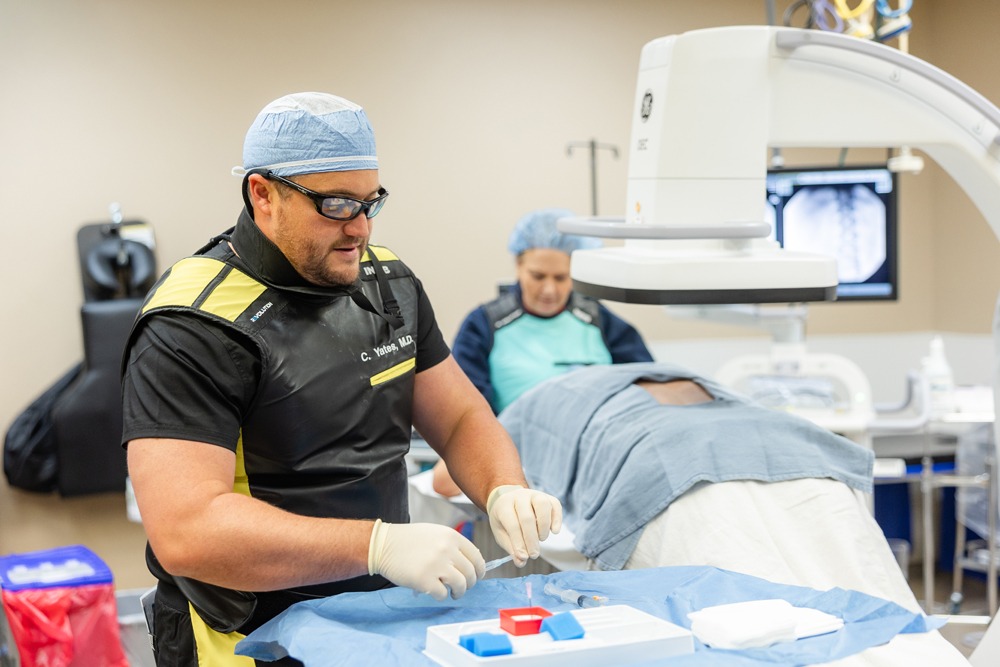
Radiofrequency ablation is a minimally invasive technique and therefore administration of general anesthetic is not required. You will have the option to receive conscious IV sedation throughout the procedure though. Only a small area over your back which requires treatment is cleansed and numbed. Sterile draping is applied to keep thorough sterile technique throughout the procedure by the pain physician. This procedure is performed under the guidance of X-ray/fluoroscopy. During the procedure, your doctor will direct a special radiofrequency needle electrode close to the facet joint in such a manner that the needle tip lies near to the medial branch nerves that supply the facet joint with sensation. Nerve testing will usually be employed by using either sensory or motor testing at the treatment site to help confirm correct needle placement and to avoid any unwanted injury to other nerves. The needle tip is then heated so that the nerve gets cauterized and destroyed thereby reducing the pain. This procedure may last for 10-30 minutes depending on extent and location of the procedure.
What are expectations before Radiofrequency Ablation procedures?
You are advised to avoid driving after receiving this procedure, as well as any moderate-strenuous activity for several days. A driver will be needed to take you home regardless of receiving sedation or not. It is also required to not eat or drink for at least 4-6 hours prior to the procedure. You may take your approved medications with a sip of water.
What are expectations after Radiofrequency Ablation procedures?
- It is important to know that relief from the RFA procedure can vary significantly. Many people can experience immediate relief the day-of or days after the procedure from their chronic joint related pain due to the local anesthetic and steroid used during the ablation, however most people should expect to experience temporary increase in pain due to soreness at the injection sites that is best treated with ice packs x2-3 daily for 2-3 days, as well as using over-the-counter medications such as Tylenol and ibuprofen to assist with any discomfort felt from the procedure. It is recommended to potentially plan for lessened physical activity for a few days because of this temporary increase in discomfort at the injection sites.
- Follow-up for results of this procedure are usually not for several weeks as expectations are that it can take up to 4-6 weeks for the full benefit to be seen. The nerves are heated but can take several weeks on average to fully denature/“die-off” and pain transmission to significantly lessen.
- Longevity of relief varies among patients. It is highly recommended to pursue core-strengthening activities, home exercise programs, daily stretching exercises to help build muscles and provide longer duration of relief after RFA.
- Talk to you doctor for more details on expectations after RFA
- Will I need to repeat RFA treatment?
- It is very common that re-treatment by radiofrequency ablation of the facet joint pain occurs. The human body can regenerate the medial branch nerves that were treated by RFA, and pain can begin to increase again over time even with very successful ablation results. Talk to your physician if this pain does return significantly with time and if you are a candidate for re-treatment by repeat radiofrequency ablation.
- Diagnostic medial branch blocks are required by insurance prior to the first radiofrequency ablation. There are exceptions, but these short-term diagnostic medial branch blocks usually will NOT have to be repeated prior to repeat RFA
- Generally, to be considered a candidate for repeat RFA over time, a patient will need to experience significant benefit from the previous RFA treatment(s), and not before at least 6 months has elapsed since the previous RFA.
Post-procedural Care following a Radiofrequency Ablation?
- You should arrange for someone to drive you home after the procedure.
- You may continue your routine prescribed medications and eat/drink as normal.
- You may shower the day of the procedure. Band-aids will be used to cover the injections sites usually and they can be removed after several hours and any oozing/bleeding has subsided (usually minimal bleeding expected). Avoid baths, hot tubs, public swimming places with submerging under water for 2-3 days or until injection sites have well-healed.
- You may experience localized pain at the injection site especially in the first 2-3 days, for which ice packs can be applied to ease the discomfort. Other medications can be taken to lessen any short-term discomfort as well, including over-the-counter pain medications that your physicians have approved to take (Tylenol, ibuprofen, etc…)
- You can return to your regular activities, a day after the procedure for the nerve blocks and usually the RFA as well. Increased soreness and discomfort is expected after the RFA compared to the blocks. It is recommended to anticipate lighter activities after the RFA for 2-3 days. There are no major restrictions to activity but mild-moderate discomfort may limit them.
- In cases where improvement in the pain is seen, you are advised to perform moderate activities, with regular exercises.
What are potential side effects of Radiofrequency Ablation?
Although a Radiofrequency Ablation procedure is a safe procedure, the possible risks and complications associated with the procedure may include:
- Allergic reaction
- Bleeding and bruising at the site of injection
- Infection at the site of injection
- Discomfort at the site of injection
- Temporary numbness and skin redness
- Pain and burning – A burning sensation or increased pain is common at the treatment site, which may feel like a sunburn and can last for a few days to a few weeks. This is usually self-limiting, but talk to your doctor if you believe you are experiencing this as certain medications can be prescribed to help with the increased sensitivity.
- More serious but very rare complications are vascular injury, nerve injury leading to pain in weakness in the lower extremities, as well as skin burns after RFA.
What you can do
- For pain and swelling: Apply ice packs for 20 minutes at a time, several times a day, and follow your doctor’s instructions for over-the-counter pain medication.
- For infection: Follow your doctor’s instructions for wound care and hygiene. Contact your doctor immediately if you suspect an infection.
- For all concerns: If you have any concerns about your symptoms, especially if they are severe or don’t improve, contact your healthcare provider.
